

From humble beginnings, as the leading nation brand now commands a category.
When eastern North Carolina produce growers looked for a way to market their cucumbers there was a visionary moment of creating a pickle company. In 2026, that moment will celebrate a century that has made Mt. Olive Pickle America’s number one brand of pickles, peppers, and relishes.
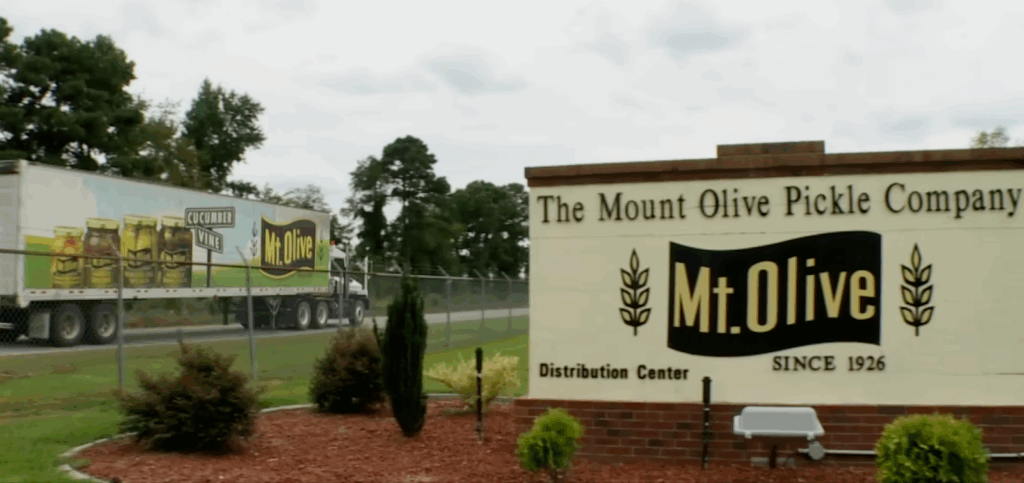
Mt. Olive Pickle Company employs about 1,200 employees.
Located at the Corner of Cucumber and Vine, Mt. Olive employs around 1,300 workers, mostly from the town of its namesake, Mount Olive, NC, and processes about 250 million pounds of cucumbers and peppers from across the world. Its processing facility covers 250 acres with 1.5 million square feet of manufacturing and warehouse under roof.
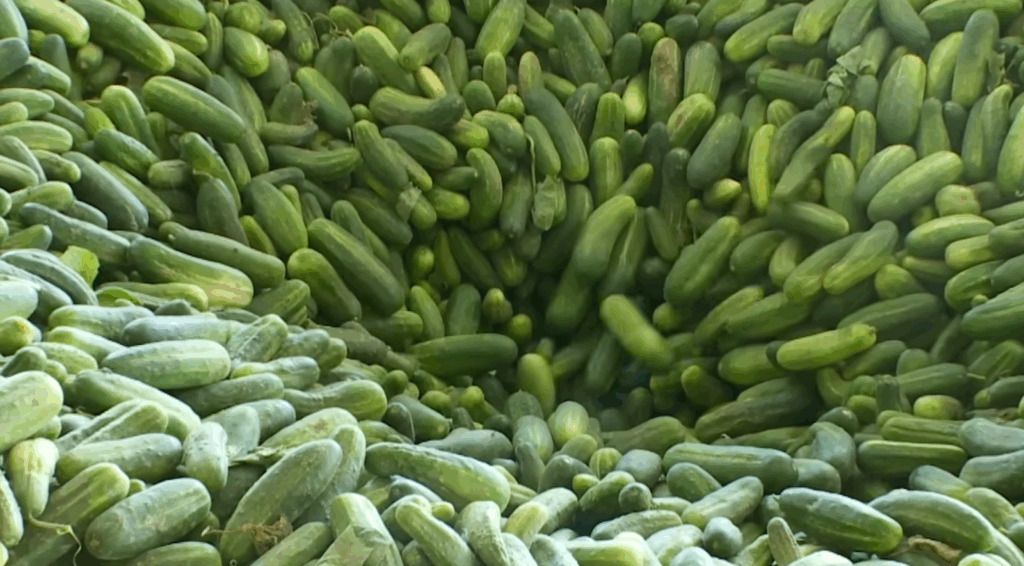
With raw product following the sun from a growing standpoint, Mt. Olive Pickle has to be nimble.
Larry Beckman is Mt. Olive’s Vice-President of Manufacturing and a former SFPA Board Member. “One of the unique challenges we have is packing a fresh crop. While we can project our packing plan, we set the plant’s production plan just a day before. That means that we must be nimble in making sure the right jars, labels, and other materials are staged and ready to go each day.”
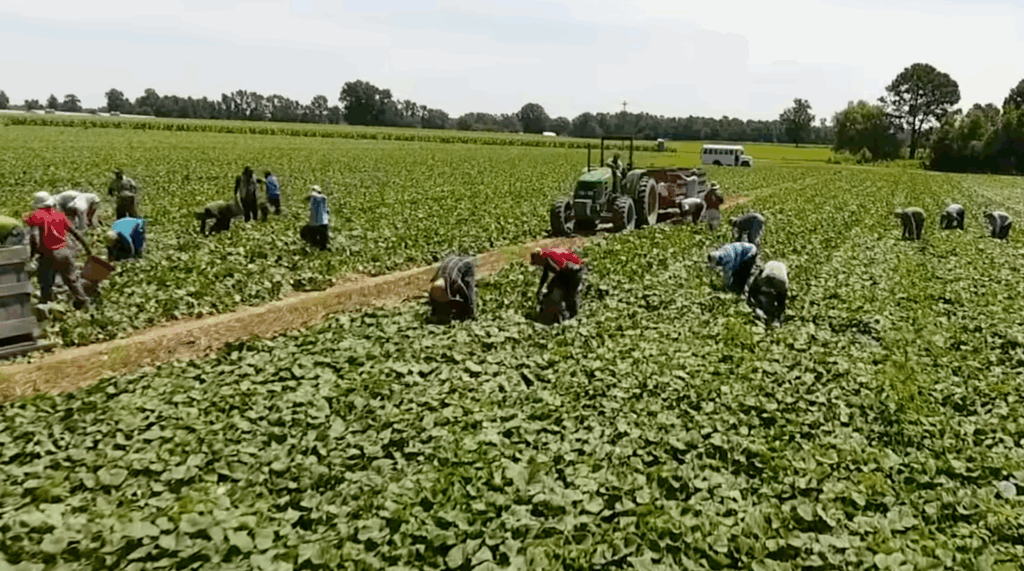
North and South Carolina farms offer raw products from two growing seasons.
About one third of Mt. Olive cucumbers are grown in the Carolinas with the remainder following the summer sun across America, supplemented by peppers and cucumbers from a variety of nations. “From January till March, our cucumbers are coming from places like Mexico. By April, we’re contracting for deliveries from Florida and in May from Georgia and Alabama. Our North and South Carolina growers provide cucumbers from June through September. In the hot summer months, we may go as far north as Michigan and Canada to buy great-tasting pickles,” Larry says.
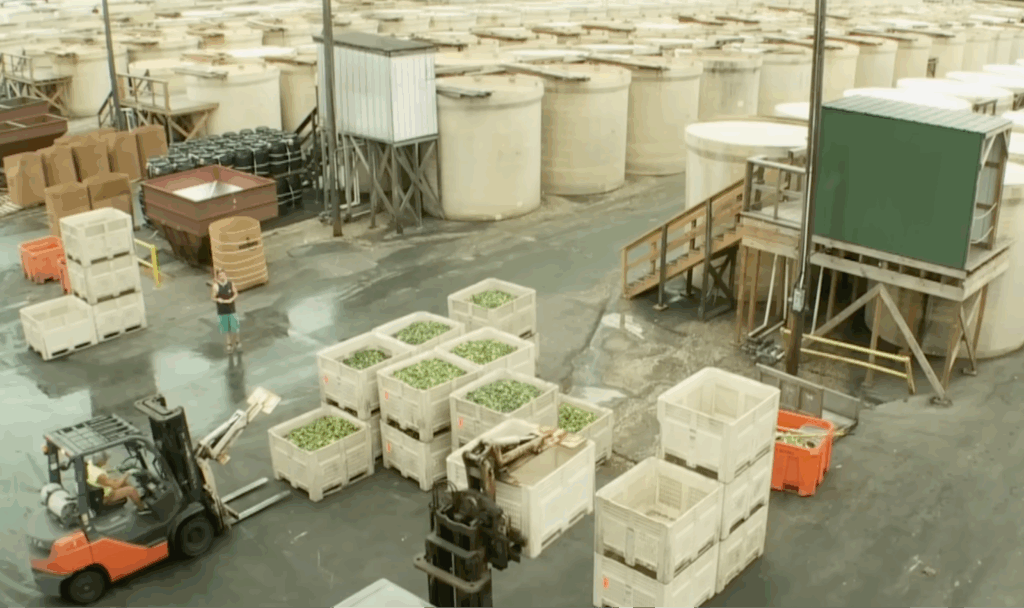
Products being staged for fresh pack or processed products.
While 70% of the company’s products are packed fresh from the field, about 40 million pounds of other raw products are stored in brine tanks for processing, especially in the winter month. Overall, the company sells more than 230 million jars of pickles, peppers, and relish each year.
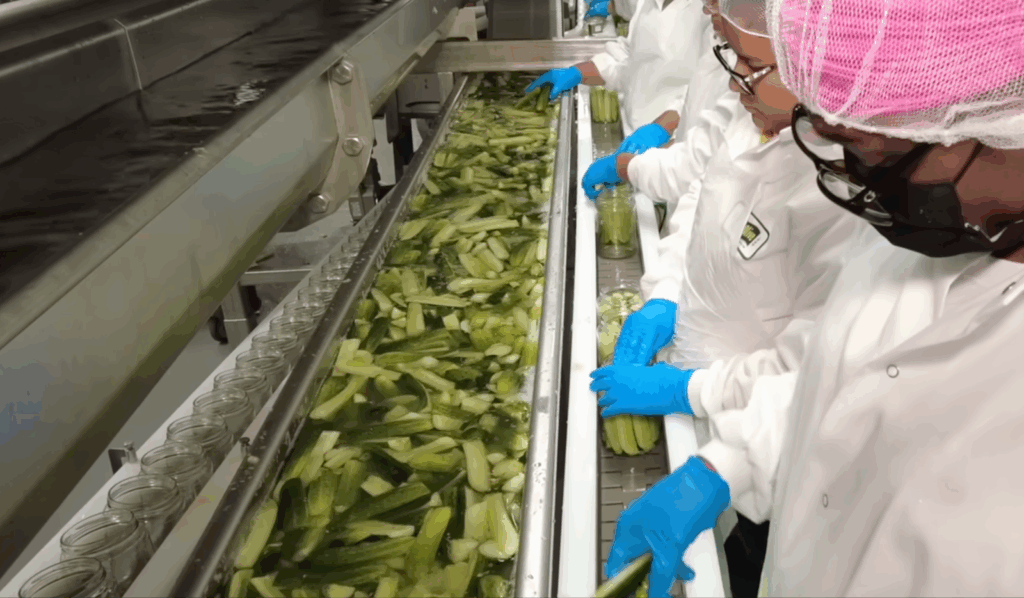
Processing provides employment to the region.
A key marketing event in the company’s history was the consolidation of numerous regional brands early in its history into one single brand to grow national awareness and market share nationwide.
“Our philosophy is a brand within a brand,” Larry explains. “Mt. Olive Pickles is our master brand, and below it we have our sub-brands such as our traditional pickles line, our sea salt, sweet heat, and others. Our latest sub-brand is called Majestic. This brand is our gourmet line offering our best quality pickles and ingredients. We launched Majestic in 2024, and it is doing quite well. For our 100-anniversary in 2026, we are planning another brand to be called Clearly. This brand will have natural flavors and no coloring in the jar to offer simply nature’s best flavor.”
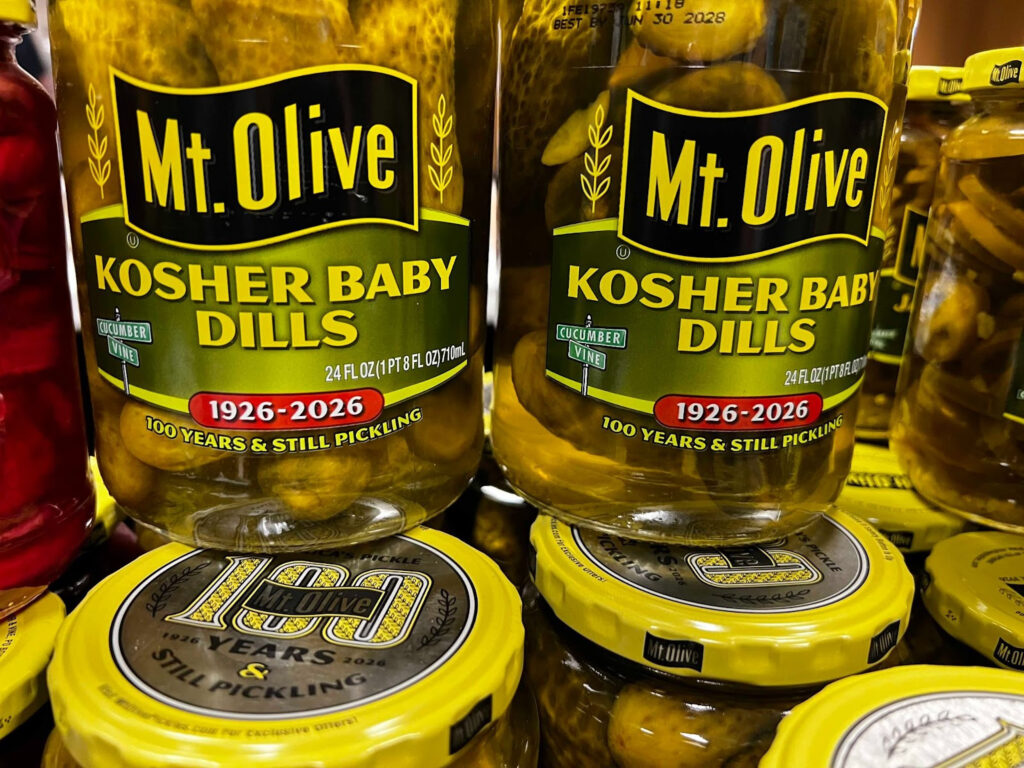
Packaging is ready to celebrate 100 years in 2026.
The company’s story is unique as many of the families who threw their fortunes into the founding of Mt. Olive Pickle Company back in the 1920s are still shareholders. Many of them still live in Mount Olive. The company’s board of directors is led by chairman Bill Bryan, and Bobby Frye serves as President and Chief Executive Officer.

Bobby Frye leads the company.
For the town of 4,300 and the region, the company provides a strong economy with good jobs and benefits with the pride of the name of their hometown being shared on every grocery shelf in America.

The Pickle Drop on New Year’s Eve is just one tourism event sponsored by Mt. Olive Pickle Company.
The landmark brand also drives tourism dollars into the town each year, with events ranging from the New Year’s Pickle Drop and the North Carolina Pickle Festival, a spring street festival that draws tens of thousands of visitors. The company also gives back to the community in annual charitable donations, amounting to $1.6 million in 2024.
When asked about the value of a food processor’s membership in the SFPA, Larry was clear in the benefits. “First, the SFPA is important to our company as a way to benchmark our performance with other regional food processors with a national brand footprint. Secondly, every year we meet associate member suppliers who bring us new ways to be more efficient or who can add value to our process. This year, I walked away with three business cards that I look forward to continuing conversations about potentially working together in the future.”
From a little cuke, to a big dill. That’s the story of a small North Carolina town with a big vision almost 100 years ago. That vision is set for continued growth for many years to come.